
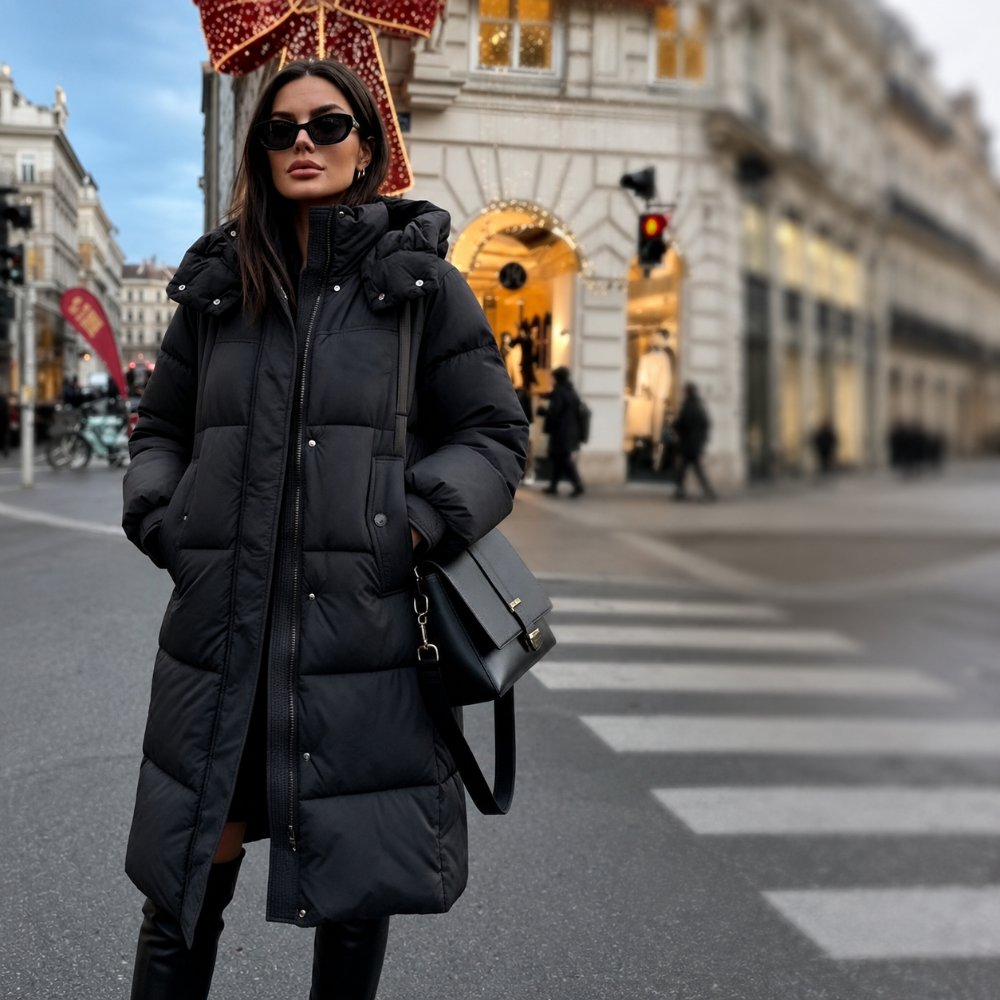
W415 Coat RFQs: Confirm the Pocket Version
For a W415 coat pocket-version RFQ, request an annotated pocket map tied to the actual offered garment, sample size and colour reference. Ask the supplier to distinguish a usable pocket from a decorative flap and identify the construction reference for each position. Treat differences between catalogue presentations as questions to resolve before accepting the quoted version.
A wholesale padded jackets inquiry can become unclear when the product name remains the same while pictures show different front details. The buyer needs to know which pocket arrangement belongs to the actual offer. A short version record connects the supplier quotation, sample and marked garment views, providing a precise alternative to ordering by the general appearance of a catalogue photograph.
W415 gallery reference; ask the supplier which pocket construction belongs to the actual offered version.
Identify the offered W415 garment before counting pockets
The official W415 product listing provides the starting style reference. Its gallery presents black, navy and brown long padded coats with visible front details. Use the selected picture to begin the discussion and ask the supplier to identify the exact version being quoted. A shared listing name does not establish that every pictured presentation has identical pocket construction.
Request the supplier style or version reference, the sample size and the colour reference covered by its reply. Keep those identifiers beside the annotated garment image. If the supplier uses one photograph to represent several offers, ask it to explain which pocket details remain applicable to each offer. This avoids using the picture selection alone as a complete specification for an order.
Create a position map that both parties can read
Ask the supplier to mark the chest and lower-front positions relevant to the offered garment. Give each position a clear label that can be reused in later questions. The map should make it possible to identify a feature without relying on an ambiguous description such as the upper flap. Request additional garment views where a selected picture does not show enough detail to describe the offer.
Keep the map focused on the supplier-confirmed arrangement. Do not infer unseen internal pockets or assume matching features on both sides from an angled photograph. Where the buyer needs information on an area not shown, list it as a question and ask for the corresponding view. An unanswered location is a scope item to resolve, not a reason to invent a count from the catalogue.
Buying field
Requested supplier response
Offer identity
W415 supplier version, selected colour reference and identified sample size.
Position map
Marked garment views with clear labels for the relevant pocket locations.
Feature description
Supplier confirmation of usable pocket, decorative flap or another construction at each position.
Construction reference
Applicable supplier drawing, detail view or sample reference for the described feature.
Version applicability
Colour and size offers covered by the map, with any differences stated separately.
Accepted revision
Agreed pocket arrangement and the quotation or sample reference it accompanies.
Related W415 gallery presentation; colour and overall similarity do not establish an identical offered pocket layout.
Distinguish a pocket opening from a visible flap
Ask the supplier whether each marked feature opens into a usable pocket or is a decorative detail. Request an identified detail view or construction reference that explains the offered arrangement. A visible outline or flap is useful for locating the question, but appearance alone does not establish the presence of a pocket bag, the opening direction or the scope of the supplied feature.
Where the supplier describes a closure, ask it to identify the relevant reference for that offered position. Keep that information separate from assumptions about storage capacity, attachment strength or other performance. The purchasing objective at this stage is to define what the garment contains and which reference describes it. Any additional functional requirement should be put to the supplier as its own clearly stated question.
Clarify the chest-flap difference in the gallery
The brown catalogue presentation shows a visible chest-flap feature that needs clarification against the other W415 presentations. Ask the supplier whether it belongs to a distinct offered version and whether that feature is included in the exact colour and size being quoted. Do not transfer the brown presentation detail to the black or navy offer without a specific supplier reply.
If more than one version is offered, request a simple mapping between the version identifier and its pocket arrangement. Keep the buyer selection and supplier alternative distinguishable. Where a picture is only illustrative, ask which marked reference should control the actual supply discussion. This lets purchasing compare the differences without declaring that the entire gallery represents one unchanged garment.
The pictured chest-pocket feature is an appearance reference for clarification, not confirmation that all W415 offers include it.
Retain the arrangement with the sample and order
Request an identified sample corresponding to the proposed pocket version. Link it to the marked views and supplier explanation so that a reviewer can connect the physical garment to the quotation. Describe any difference against the labelled position rather than asking for a general match to the website. A specific question is easier for the supplier to answer and easier to retain as part of the purchasing record.
Before accepting the offer, compare the version identifier, colour and size scope across the quotation, sample and pocket map. Record any agreed change under a revised reference. For a repeat purchase, ask whether the earlier arrangement remains applicable, especially when the supplier proposes another catalogue presentation. Keep pocket identity separate from insulation, warmth or fabric claims; confirming the pocket version does not establish those unrelated properties.
Buyer FAQ
Does the W415 gallery prove that every colour has the same pockets?
Request a supplier mapping for the exact offered versions. The visible chest-flap difference should be clarified rather than transferred across the gallery.
How can a buyer distinguish a pocket from a decorative flap?
Ask for a supplier description and identified detail or construction reference tied to the marked position on the actual offered garment.
Should unseen inside pockets be included in the count?
Ask the supplier to state the actual arrangement and supply the relevant view. Do not infer an unseen feature from the external presentation.
What should accompany a repeat W415 order?
Retain the accepted version identifier, colour and size scope, annotated pocket map and identified supplier sample or document revision.
Start with the official W415 product reference, review the garment catalogue and send the marked pocket-version inquiry through the supplier website.
Identify the actual offered W415 version, colour and sample size.
Map the positions and distinguish pockets from decorative details.
Retain supplier-confirmed differences with the accepted sample and quotation.
wholesale padded jacketsB2B supplier sample record